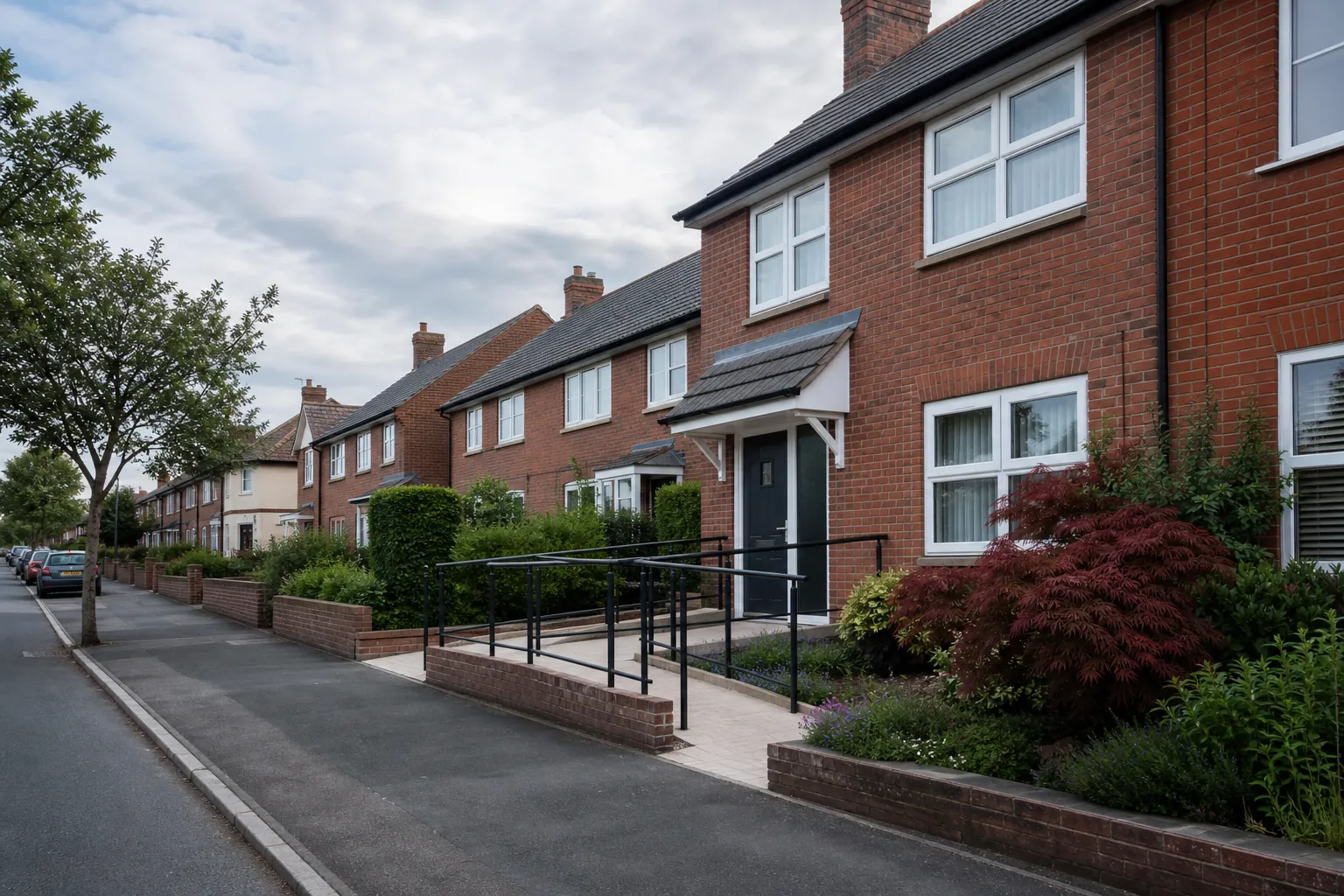
What is supported living?
Supported living is an arrangement where an adult who needs help to live independently has their own home, with their own tenancy or occupancy agreement, and re

Supported living is an arrangement where an adult who needs help to live independently has their own home, with their own tenancy or occupancy agreement, and receives care and support as a separate service.
That separation between the home and the support is the whole point, and it is what distinguishes supported living from a care home. This guide explains how it works, who it is for, who pays, and how the property behind it is owned.
How supported living works
A person lives in an ordinary house or flat, either alone or sharing with a small number of others. They hold a tenancy or occupancy agreement for that home. Separately, a care provider delivers support: help with daily living, medication, appointments, budgeting, employment or whatever the person's assessed needs require, from a few hours a week to twenty-four hour staffing.
Because the two are separate, a person can in principle change their support provider without moving home, and keeps the legal rights of a tenant rather than the status of a resident being accommodated. That distinction carries real weight in law and in how the arrangement is funded.
Who supported living is for
Most people in supported living are working-age adults with learning disabilities, autism, mental health needs, physical disabilities or acquired brain injuries. Some schemes support younger adults leaving care, people recovering from addiction, or people who have experienced homelessness.
The common thread is that the person can live in their own home with the right support, rather than needing the round-the-clock institutional care a care home provides. Supported living is generally the preferred model in adult social care policy precisely because it maintains independence and tenancy rights.
Who pays for supported living?
Two separate bills, funded two separate ways. The rent and housing costs are usually met through housing benefit, and where the accommodation qualifies as exempt accommodation that benefit sits outside the normal rent caps. The care and support is funded by the local authority following a Care Act assessment, by the NHS through continuing healthcare where the person qualifies, or privately.
Residents may contribute towards care costs depending on a financial assessment, and typically pay for their own utilities, food and personal spending as any tenant would. The separation of the two funding streams is a feature of the model rather than an administrative quirk.
How long do people stay in supported living?
Generally for a long time. Supported living is intended as a permanent home rather than temporary accommodation, and many residents stay for many years, often for the rest of their lives where their support needs continue. Some people move on as their independence grows, and some move to a care home if their needs rise beyond what supported living can meet.
That long tenure is why the property model works as it does. Settled occupation gives a provider the confidence to commit to a 20 or 25 year lease, which is what makes the accommodation fundable as a long-income investment.
Can someone live with you in supported living?
Usually yes, subject to the tenancy agreement and the practicalities of the property, because the resident is a tenant with a tenant's rights. Partners can live together and visitors can stay, in the same way as in any rented home. Some shared schemes have house agreements about visitors that all residents sign up to.
This is one of the clearest practical differences from a care home, where the person is being accommodated by an operator rather than holding their own tenancy, and where visiting and cohabitation are matters of the home's policy.
Who owns the property?
Often not the care provider, and often not the housing provider either. A common structure is that a private investor owns the building and grants a long lease to a registered provider of social housing, who holds the tenancies with residents and manages the housing, while a separate care company delivers the support.
So a supported living home can involve four parties: the resident, the care provider, the housing provider and the property owner. Understanding that chain matters to anyone considering investing in the sector, because the investor sits at the far end of it and their income depends on every link holding.
What is supported living?: common questions
What qualifies you for supported living?
An assessment, usually by the local authority under the Care Act, finding that you need support to live independently. Supported living suits people who can live in their own home with the right support rather than needing the round-the-clock institutional care a care home provides.
Who pays for supported living costs?
Two separate streams. Rent and housing costs are usually met through housing benefit, which for exempt accommodation sits outside the normal rent caps. Care and support is funded by the local authority after a Care Act assessment, by the NHS through continuing healthcare, or privately, with residents sometimes contributing after a financial assessment.
How long do you live in supported living?
It is intended as a permanent home rather than temporary accommodation, so many residents stay for years and often for life where their support needs continue. That long tenure is what allows housing providers to commit to 20 and 25 year leases on the properties.
Can someone live with you in supported living?
Usually yes, subject to the tenancy agreement and the property, because you are a tenant with a tenant's rights. Partners can live together and visitors can stay. Shared schemes may have a house agreement about visitors that all residents sign up to.
Who owns supported living properties?
Often a private investor, who grants a long lease to a registered provider of social housing. The registered provider holds the tenancies and manages the housing, while a separate care company delivers support. So four parties can be involved: the resident, the care provider, the housing provider and the owner.
Ready to talk about a real deal?
Send us the deal and we will come back with a view on fundability and likely terms within one working day.