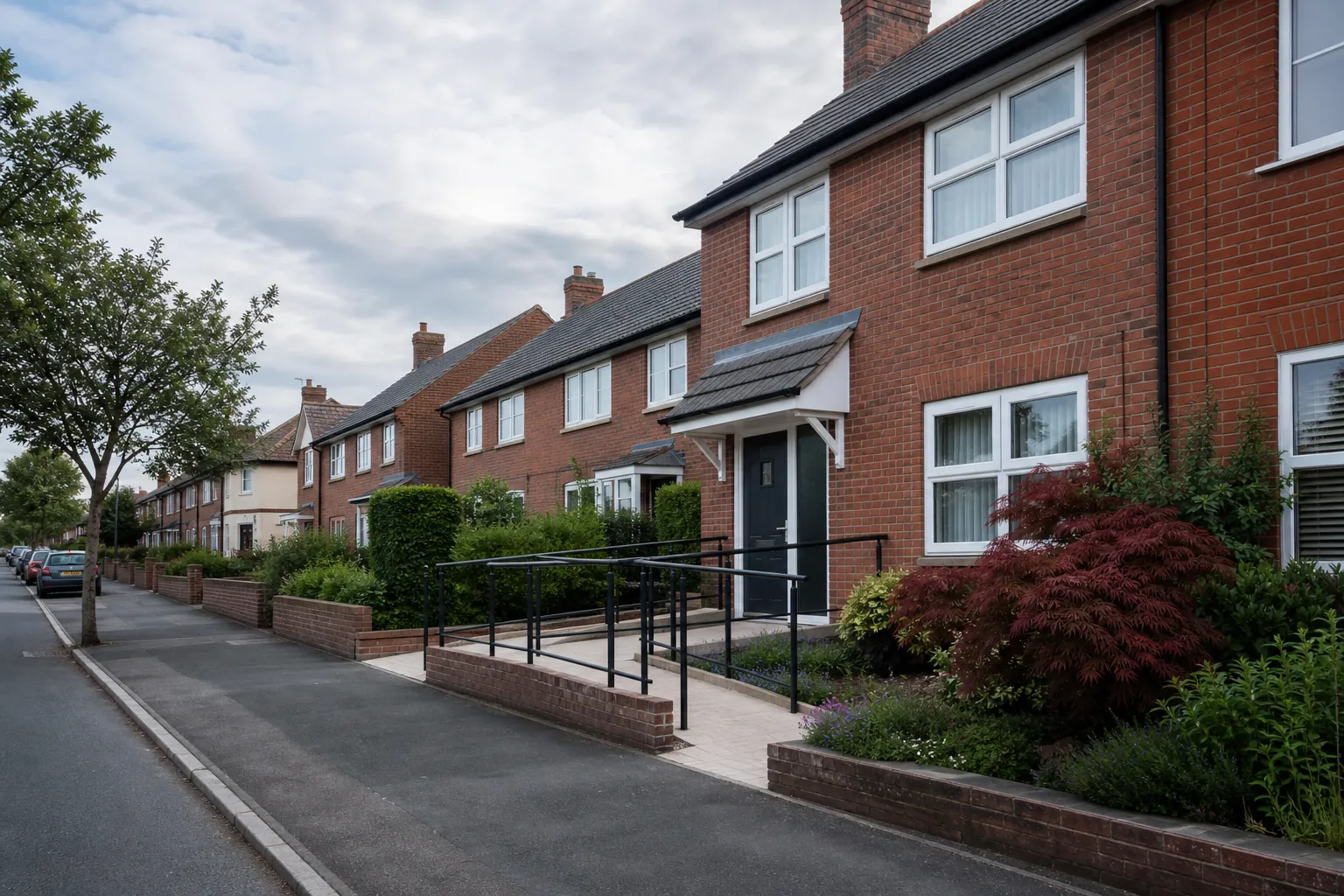
Mental health supported housing
Mental health supported housing gives people living with mental illness somewhere stable to live with support attached. It spans a wide range, from twenty-four

Mental health supported housing gives people living with mental illness somewhere stable to live with support attached. It spans a wide range, from twenty-four hour staffed recovery schemes to a flat with a support worker visiting weekly.
This guide explains the different forms it takes, how it is commissioned and funded, and how the property side of it is owned and financed.
What mental health supported housing covers
It is not one thing. At the more intensive end are registered schemes with staff on site around the clock, often supporting people stepping down from hospital. In the middle are shared houses and small schemes with staff present during the day. At the lighter end is floating support, where a person lives in their own flat and a support worker visits.
The intensity generally reflects where someone is in their recovery, and many services are explicitly designed as a step on a pathway rather than a permanent home, which is a meaningful difference from learning disability supported living.
Step-down and recovery accommodation
A large part of this sector exists to move people on from hospital. Someone medically ready for discharge but without stable accommodation can occupy an acute bed for months, which serves neither them nor the NHS. Step-down supported housing provides somewhere to go with support attached.
Because of that function, commissioning often involves the NHS as well as the local authority, and services can be contracted for defined periods with expected lengths of stay. That contracting pattern matters on the property side, as covered below.
Who commissions and pays for it
Local authorities commission much of this provision through adult social care, and NHS bodies commission some of it, particularly step-down and rehabilitation services. Accommodation costs are usually met through housing benefit, and where the provider delivers care, support or supervision the accommodation may qualify as exempt accommodation, taking the rent outside the normal caps.
Some provision is non-commissioned, meaning no authority has contracted for it and the provider relies on housing benefit alone. That distinction is one of the sharpest dividing lines in this sector for anyone assessing risk, because commissioned provision has a public body standing behind the demand and non-commissioned provision does not.
How long people stay
Considerably more variable than in learning disability supported living. Recovery-focused services may expect a stay of months to a couple of years, with a planned move on to independent living. Longer-term supported housing for people with enduring mental illness can be a permanent home.
For an owner this variability affects void risk, because turnover is higher and the provider must keep refilling the accommodation. A provider running a service with high turnover and no commissioning contract carries more risk than one running a long-stay service under a local-authority contract, even where the buildings are identical.
The property and finance angle
Many of these schemes are in privately owned buildings let on a long lease to a registered provider, exactly as in the rest of the supported housing sector. The investor owns the building, the provider holds the tenancies and manages the housing, and a care or support organisation delivers the service.
When we take one of these to a lender the questions are the same as elsewhere but the commissioning point is sharper. Is there a contract behind the service or is the provider relying on housing benefit alone? What is the expected length of stay and therefore the void exposure? And what is the building worth as ordinary residential stock if the provider leaves? We arrange the finance on that basis and do not sell the properties.
Mental health supported housing: common questions
What is supported accommodation for mental health?
Housing with support attached for people living with mental illness, ranging from schemes staffed around the clock, often for people stepping down from hospital, through shared houses with daytime staff, to floating support where a worker visits someone in their own flat.
Can you get housing because of mental health?
Mental health needs are taken into account in housing and care assessments, and supported housing is commissioned specifically for people who need it. Access is arranged through the local authority or NHS after an assessment rather than by approaching a landlord directly.
How long do people stay in mental health supported housing?
It varies more than in other parts of the sector. Recovery-focused services may expect months to a couple of years with a planned move on to independent living, while longer-term supported housing for people with enduring illness can be a permanent home.
Who pays for mental health supported housing?
Accommodation costs are usually met through housing benefit, and where the provider delivers care, support or supervision the accommodation may qualify as exempt accommodation. The support itself is commissioned by the local authority through adult social care or by the NHS, particularly for step-down services.
What should an investor check on a mental health supported housing scheme?
Whether the service is commissioned under a contract or the provider relies on housing benefit alone, the expected length of stay and therefore void exposure, the provider's regulatory standing and accounts, and what the building is worth as ordinary residential stock if the provider leaves.
Ready to talk about a real deal?
Send us the deal and we will come back with a view on fundability and likely terms within one working day.