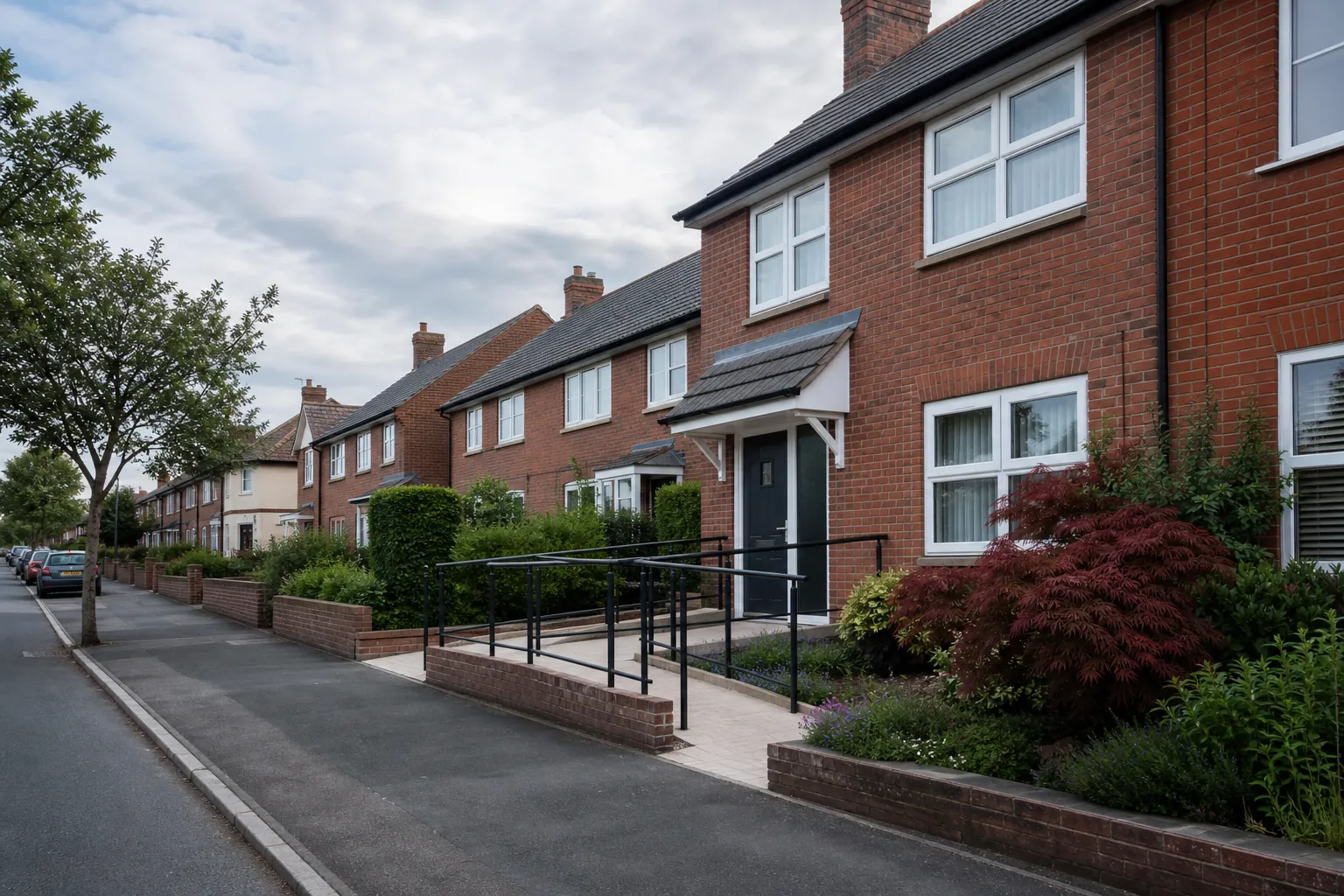
Supported housing mezzanine finance
Second-ranking capital behind a senior facility, used to close the gap between what a senior lender will advance and what a scheme actually costs.

Closing the gap above senior debt
Mezzanine finance is subordinated debt that ranks behind the senior lender and ahead of your equity. On a supported housing scheme where a senior development lender advances 65 percent of cost, mezzanine can take total debt to around 85 or 90 percent, cutting the cash a developer or investor has to find. It is priced for the risk of that junior position, so it is materially more expensive than senior debt and is used to make a scheme possible or to release capital for the next one, not to reduce the overall cost of funding.
It arrives with conditions. The senior lender must agree to it, and the two lenders enter an intercreditor agreement setting out who gets paid first and who controls enforcement. Where a senior lender refuses to allow a second charge, the alternative is usually joint venture equity instead. We arrange the senior facility and the mezzanine together so the intercreditor position is negotiated as one package rather than bolted on late, which is when it tends to fall apart.
Key features
- Sits behind senior debt, taking total leverage to around 85 to 90 percent of cost
- Reduces the equity cheque on a development or a larger acquisition
- Requires senior lender consent and an intercreditor agreement
- Priced for the junior position, so used selectively rather than as standard
Indicative terms
- Facility size (indicative)£250k to £10m
- Combined leverage (indicative)Up to around 85 to 90% of cost
- Rates (indicative)From around 12% a year, or a return participation
- Term (indicative)12 to 36 months, aligned to the senior facility
- SecuritySecond charge, plus share pledges and guarantees
Indicative only. Terms vary by lender, scheme and borrower and are not an offer of finance.
Who it suits
- Developers stretching a senior facility on a supported housing or extra care scheme
- Investors running more than one project at once who need to spread their capital
- Sponsors topping up funding on a larger acquisition or conversion
- Developers who would rather pay for debt than give away equity in the scheme
Useful calculators
Discuss supported housing mezzanine finance
A view on fundability within one working day.
When mezzanine costs less than giving away equity
The honest comparison is not mezzanine against senior debt, it is mezzanine against a joint venture partner. Mezzanine at 12 to 18 percent a year on a 20-month scheme is expensive, but it is a defined cost with an end date. A joint venture partner taking 40 percent of the profit on a scheme with a healthy margin can cost considerably more, and keeps costing on every future decision because they hold a say.
The arithmetic turns on the scheme's margin and duration. On a high-margin, short-duration scheme, mezzanine usually wins because the fixed cost is small against the profit retained. On a thin-margin or long-duration scheme, the interest compounds and equity may be the better trade. We model both before recommending either.
The intercreditor agreement, and why it decides everything
The intercreditor agreement between the senior lender and the mezzanine provider governs payment priority, whether the mezzanine can enforce and when, standstill periods, and what happens if the scheme goes wrong. It is the document that determines whether the mezzanine provider is a passive junior lender or a party with real leverage over your project.
Because senior lenders vary widely in what they will accept, the sequencing matters. Agreeing mezzanine terms before establishing the senior lender's position on subordination is a common and costly mistake, because a senior lender that refuses a second charge outright can unpick weeks of negotiation. We settle the senior lender's stance first.
How mezzanine is assessed on a supported housing scheme
A mezzanine provider is exposed to the residual value of the scheme after the senior debt is repaid, so it looks harder at the exit than the senior lender does. On a supported housing development that means testing the pre-let or forward funding agreement, the provider's covenant, and what the scheme is worth if that provider walks away.
This is where a pre-let scheme is transformed. Mezzanine on a speculative supported housing development is expensive and often unavailable, because the junior position on a scheme with no contracted exit is close to equity risk at debt returns. Mezzanine behind a scheme forward funded to a housing association is a much easier conversation and prices accordingly.
Where mezzanine is not the answer
Mezzanine does not fix a scheme that does not work. Where an appraisal is thin, adding expensive junior debt makes it thinner, and the compounding interest on a project that overruns can consume the entire margin. Several developers who came to us for mezzanine actually needed a lower land price, a revised specification or a different exit.
It is also rarely right on a small single-unit supported living acquisition, where the absolute sums do not justify the legal cost of an intercreditor agreement. On those deals, more equity or a cheaper property is almost always the better answer, and we will say so.
Worked example: mezzanine behind a supported housing conversion
A developer is converting a building into 10 supported living units at a total scheme cost of £1.8m, pre-let to a registered provider with a gross development value of £2.5m. These figures are illustrative only and not an offer of finance.
The senior lender advances 65 percent of cost, £1.17m, leaving £630,000 for the developer to find. They have £280,000 available, so there is a gap of £350,000. A mezzanine provider advances that £350,000 on a second charge behind the senior facility, taking combined debt to £1.52m, around 85 percent of cost.
At an indicative 14 percent a year over an 18-month term, the mezzanine costs roughly £73,000 in interest plus arrangement fees. Against a scheme margin of around £700,000 before finance costs, that is a defined cost that leaves the developer holding the balance of the profit and the whole of the decision-making.
The alternative offered was a joint venture partner putting in the same £350,000 for 35 percent of the profit, which on a £700,000 margin would have cost roughly £245,000. On this scheme, with a contracted pre-let and a short programme, the mezzanine is clearly the cheaper capital. On a speculative scheme running three years, the comparison could easily reverse.
Illustrative worked example only. Figures vary by lender, asset and borrower and are not an offer of finance.
Supported housing mezzanine finance: common questions
What is mezzanine finance in property development?
Mezzanine is subordinated debt ranking behind the senior lender and ahead of your equity. On a supported housing scheme it typically takes total debt from around 65 percent of cost to 85 or 90 percent, reducing the cash you need to find. It is priced for that junior position, so it is materially more expensive than senior debt.
Is mezzanine cheaper than a joint venture partner?
It depends on the scheme's margin and duration. On a high-margin, short-duration scheme mezzanine usually wins, because a fixed 12 to 18 percent cost is small against the profit retained. On a thin-margin or long scheme the interest compounds and equity may be the better trade. We model both before recommending either.
Does the senior lender have to agree to mezzanine?
Yes. The senior lender must consent to the second charge and the two lenders enter an intercreditor agreement governing payment priority, enforcement rights and standstill periods. Settling the senior lender's position on subordination before negotiating mezzanine terms avoids the most common wasted effort on these deals.
Can I get mezzanine on a speculative supported housing scheme?
It is expensive and often unavailable. A junior position on a scheme with no contracted exit is close to equity risk at debt returns, so most providers decline or price prohibitively. Mezzanine behind a scheme pre-let or forward funded to a registered provider is a far easier conversation.
What security does a mezzanine lender take?
Typically a second charge over the property behind the senior lender, plus a share pledge over the borrowing entity and personal or corporate guarantees. The share pledge matters, because it lets the mezzanine provider take control of the company rather than having to enforce over the property itself.
Discuss supported housing mezzanine finance
Send us your scheme and we will come back with a view on fundability and likely terms within one working day.