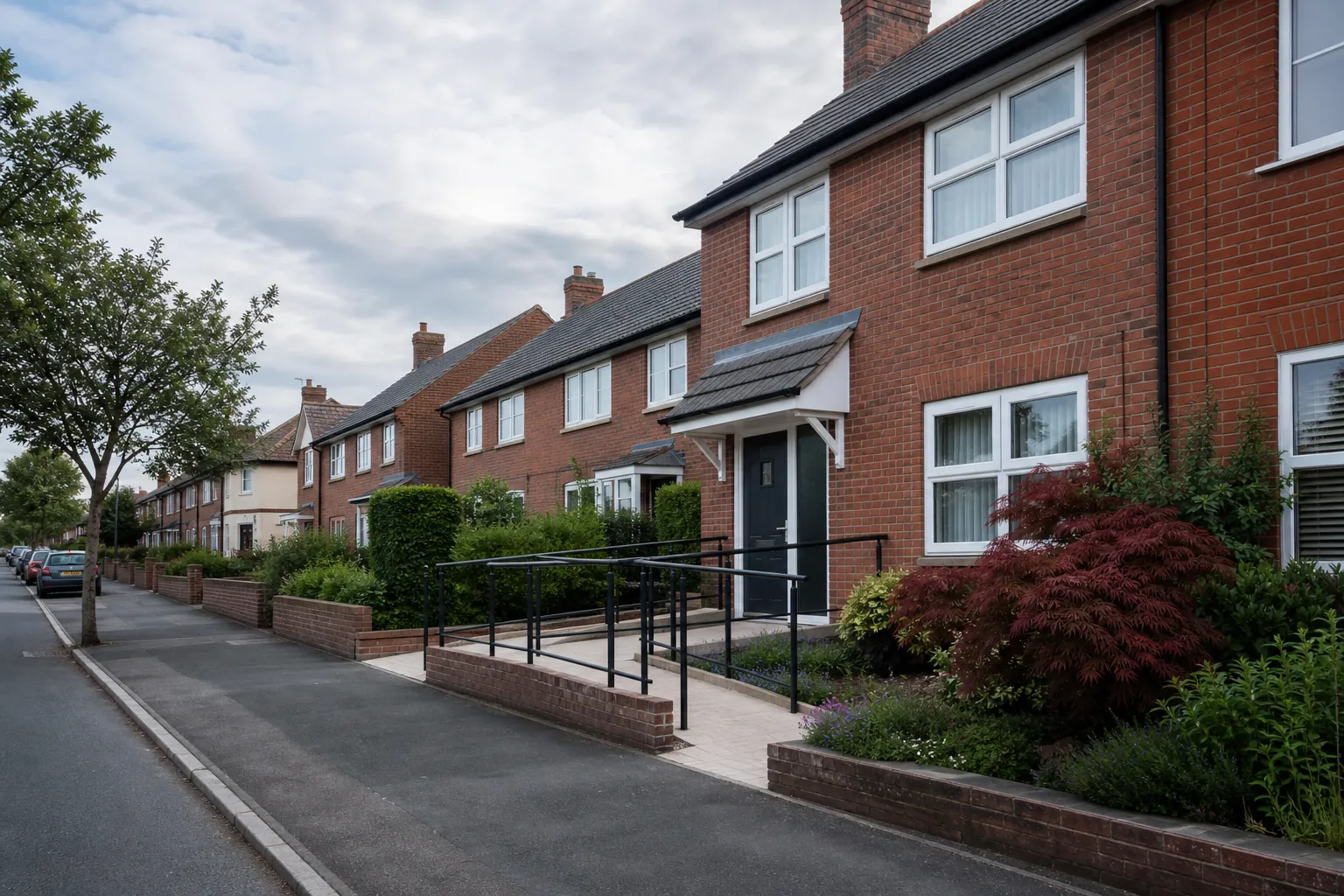
Supported housing acquisition finance
We arrange funding to buy supported living and supported housing property let, or to be let, to a registered provider, anywhere in the UK.

Buying a lease-backed supported housing investment
Supported housing acquisition finance is debt raised to buy specialist supported housing, supported living stock or social housing let to a registered provider. The credit test is the lease and the counterparty rather than the borrower's own trading. A lender examines the lease length, the indexation mechanism, whether repairs and insurance genuinely sit with the provider, the standing of the registered provider or housing association on the other side of it, and the vacant possession value of the building as the downside if that provider fails.
The counterparty pool is deep on paper and narrow in practice. There were 1,581 registered providers on the register at 31 March 2025, of which 1,353 private registered providers (Regulator of Social Housing, Statistical Data Return 2025), but the number a specialist lender will accept on a 25-year lease at sensible leverage is a fraction of that. We know which providers clear credit at which lenders, which is usually the difference between a deal that funds in eight weeks and one that shops around for six months. We manage the process from indicative terms through valuation and due diligence to drawdown, and we act as arranger and introducer throughout. We do not lend and we do not sell investment property.
Key features
- Funds the purchase of supported living, SSH, exempt accommodation or social housing stock
- Sized on the lease income and the registered provider or housing association covenant
- Vacant possession value assessed up front, because it usually sets the real loan amount
- We compare loan to value, rate and structure across multiple lenders before you commit
Indicative terms
- Loan size (indicative)£150k to £25m and above
- Loan to value (indicative)Up to around 65 to 75%, counterparty dependent
- Rates (indicative)From around 5.5% on a strong association lease
- Term (indicative)5 to 25 years
- Valuation basisInvestment or vacant possession, established before application
Indicative only. Terms vary by lender, scheme and borrower and are not an offer of finance.
Who it suits
- Investors buying supported living stock already let to a registered provider
- Landlords assembling a portfolio across one or more providers
- Buyers acquiring section 106 affordable units from a developer
- Investors moving from mainstream buy-to-let into lease-backed supported housing
Useful calculators
Related guides
Discuss supported housing acquisition finance
A view on fundability within one working day.
How lenders value a lease-backed supported housing asset
There are two valuation bases and the gap between them decides the deal. On the investment basis the valuer capitalises the contracted, index-linked rent at a yield reflecting the lease length and the covenant strength, which is the basis the seller's brochure assumes. On the vacant possession basis the valuer ignores the lease entirely and asks what the building is worth as ordinary residential stock.
Where the counterparty is a substantial housing association on a long lease, lenders will often work from the investment value. Where it is a small lease-based provider, most will size the loan on vacant possession, and that can halve the facility. Establishing which basis applies before an offer is accepted, rather than at valuation, is the single most useful thing we do on an acquisition.
Why mainstream buy-to-let lending does not reach this sector
A supported housing purchase looks like a residential purchase and is financed nothing like one. The tenant is a company on a commercial lease rather than an individual on an assured shorthold tenancy, the property may be adapted, and the rent depends on housing benefit under exempt-accommodation rules. Mainstream buy-to-let criteria do not accommodate any of that.
Funding comes instead from specialist lenders, challenger banks and a small number of clearing banks with dedicated social housing teams. Investors who proceed to offer assuming a buy-to-let product will work lose the most time, because the problem surfaces after solicitors are instructed. We establish the right lender group before an offer goes in.
What a lender needs from you at the outset
A complete acquisition submission carries the draft or executed lease, the identity and registration details of the provider, its most recent accounts and any published regulatory judgement, evidence of the rent and how it is funded, the property schedule and condition, and your own experience and financial position.
The item most often missing is anything meaningful about the provider. Sellers frequently disclose only the provider's name and the headline lease terms. A credit committee will not approve a 25-year exposure on that, so we obtain the underlying material before submission rather than answering questions one at a time over six weeks.
Buying a portfolio rather than a single unit
Portfolio acquisitions bring an advantage and a risk. The advantage is efficiency: one facility, one legal process, one valuation instruction across multiple assets, and better pricing than the same units financed separately. The risk is concentration, because a portfolio let entirely to one provider carries a single point of failure however many buildings it contains.
Lenders test provider concentration directly and may cap exposure to any one counterparty. Where a portfolio spans several providers with different regulatory standings, we structure the facility so stronger assets are not dragged down by the weakest, and we flag any cross-default provisions that would let one problem property contaminate the rest.
Worked example: acquiring a let supported living portfolio
An investor buys five supported living houses in one transaction for £1.35m, let on 20-year CPI-linked FRI leases to two different registered providers, producing £94,500 a year in total. These figures are illustrative only and not an offer of finance.
The lender values the portfolio on both bases. The investment value supports the £1.35m price; the vacant possession value of the five houses as ordinary residential stock is £1.05m. Because one of the two providers is a well-capitalised association with a satisfactory regulatory judgement and the other is smaller, the lender blends its approach: it works from investment value on the three units let to the association and vacant possession on the two let to the smaller provider.
That produces a facility of roughly £860,000, around 64 percent of the purchase price, so the investor contributes about £490,000 plus costs. At an indicative rate from around 6 percent, interest of roughly £52,000 sits well under the £94,500 of rent, so income cover is comfortable and the valuation blend is the binding constraint.
The lender caps exposure to the smaller provider and includes a covenant requiring notification if either provider's regulatory judgement is downgraded. That is a normal term in this sector and worth understanding before signing, because it can trigger a review at exactly the moment refinancing elsewhere is hardest.
Illustrative worked example only. Figures vary by lender, asset and borrower and are not an offer of finance.
Supported housing acquisition finance: common questions
How much deposit do I need to buy a supported living investment?
Indicatively 25 to 35 percent of value, but the figure that matters is which value the lender uses. Where a lender sizes on vacant possession rather than on the price paid for the let investment, the effective deposit can be considerably higher. We establish the valuation basis before an application goes in.
Can I buy supported housing through a limited company?
Yes, and most investors do. Lending in this sector is generally to corporate borrowers as unregulated business lending, which is usually the cleaner route. Personal guarantees are common. Where a purchase would be a regulated mortgage contract, we refer it to an appropriately authorised firm.
How long does a supported housing acquisition take to fund?
Typically eight to twelve weeks from application to drawdown where the lease and provider information is complete at the outset. The delays we see almost always come from incomplete provider information rather than from the property, which is why we gather that material before submission.
Do lenders lend on stock let to any registered provider?
No. There were 1,581 providers on the Regulator of Social Housing register at March 2025, but the number a specialist lender will accept on a long lease at sensible leverage is far smaller. Provider acceptability varies by lender, and knowing which provider clears which credit team is most of the work.
Can you fund the purchase before the lease is signed?
Yes, usually through bridging or acquisition finance sized on the vacant possession value, with a refinance onto term debt once a provider is on a signed lease and rent is flowing. Build enough time into that facility for the lease-up period, not just the purchase.
Discuss supported housing acquisition finance
Send us your scheme and we will come back with a view on fundability and likely terms within one working day.