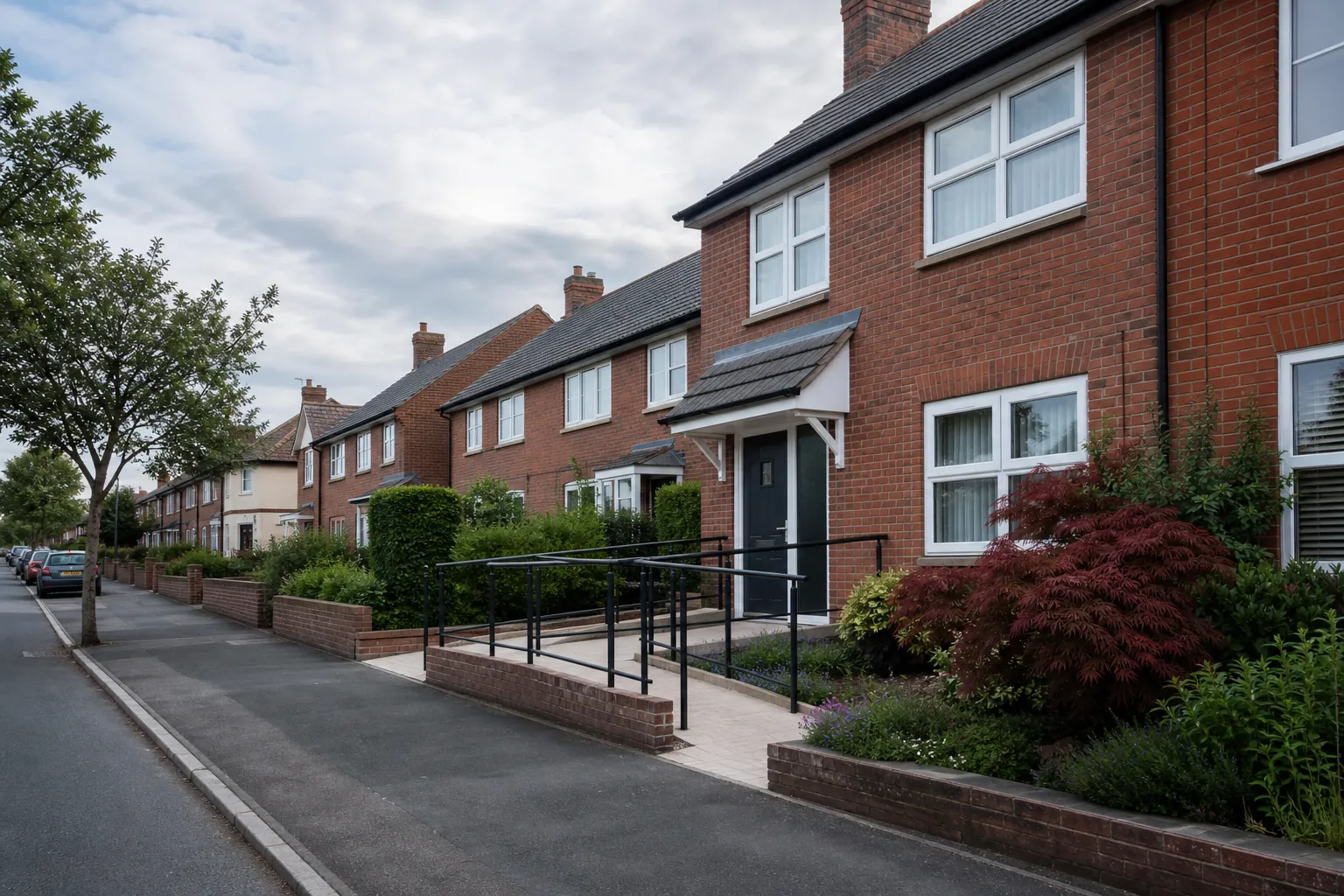
Supported housing development finance
Funding for ground-up and conversion supported housing schemes, drawn in stages against cost and repaid from a sale, a forward funding agreement or a refinance.

Building and converting supported housing schemes
Supported housing development finance funds the construction or major conversion of supported living, extra care and affordable housing, drawn in stages against a monitoring surveyor's certificates with interest rolled up into the facility. Sizing runs off two ratios: loan to cost, indicatively up to around 60 to 70 percent, and loan to gross development value, which caps the facility regardless of what cost says.
The demand case behind these schemes is well evidenced. The National Housing Federation estimates England needs at least 167,000 more supported homes by 2040, a 33 percent increase on 2023, at a development cost of £33.9bn (National Housing Federation, Supported housing in England: Estimating need and costs to 2040). Lenders know this, which is why appetite exists. What they will not do is fund a scheme on the strength of the national shortage alone: the exit has to be specific. We arrange senior development debt and, where the equity gap requires it, introduce mezzanine and joint venture capital alongside it. We are an arranger and introducer, not a lender.
Key features
- Ground-up and conversion schemes, drawn in stages against certified progress
- Sized on the lower of loan to cost and loan to gross development value
- Interest rolled up into the facility rather than serviced monthly
- Exit onto term debt, a unit sales programme, or a contracted forward sale
Indicative terms
- Facility size (indicative)£500k to £40m and above
- Loan to cost (indicative)Up to around 60 to 70%
- Loan to GDV (indicative)Up to around 60 to 65%
- Rates (indicative)From around 0.7% per month, or a margin over base
- Term (indicative)12 to 36 months including a sales or lease-up period
Indicative only. Terms vary by lender, scheme and borrower and are not an offer of finance.
Who it suits
- Developers building supported living or extra care schemes
- Investors converting larger buildings to multi-unit supported housing
- Housing providers and their delivery partners funding new supply
- Developers forward funding a scheme for a registered provider or institution
Useful calculators
Related guides
Discuss supported housing development finance
A view on fundability within one working day.
Pre-let and forward funding: the cheapest capital in the sector
A supported housing scheme with a contracted exit is a fundamentally different credit proposition to a speculative one. Where a registered provider has committed to take the completed scheme on a lease, or a housing association has agreed to buy it on practical completion, the lender is funding delivery against a known counterparty rather than against a hope of demand.
The pricing difference is substantial and so is the leverage. We test the forward funding route first on any scheme capable of supporting it, because a developer who secures a provider commitment before drawing debt typically improves their finance terms more than any amount of negotiation on margin will achieve.
How loan to cost and loan to GDV interact
The facility is capped by whichever of the two ratios bites first. A scheme with a high land cost relative to its end value will be constrained by loan to GDV; a scheme bought cheaply with heavy build costs will be constrained by loan to cost. Developers should run both calculations before approaching lenders, because the answer determines how much equity is genuinely required.
Land value is treated carefully. Lenders generally credit land at the lower of purchase price and current market value, so a developer who paid over the odds, or who bought years ago and expects a revalued figure to count as equity, will find the contribution required is larger than assumed. Where land was genuinely acquired well, an uplift may be recognised, but it needs valuation support.
Planning, use class and the schemes this affects
Self-contained supported homes generally sit in residential use, while grouped accommodation where personal care is provided can fall into use class C2, residential institutions. A conversion may therefore need a change of use, and consent has to be in place before most development lenders will draw.
On the regulatory horizon, the government confirmed in its 2026 consultation response that it will not change the planning use class treatment of supported housing at this stage, and will review the position after three years alongside the licensing regime. Development appraisals that assumed an imminent planning reform should be revisited, because the change coming to this sector is licensing rather than planning.
Building the lease-up period into the facility
A development facility on supported housing has to run past practical completion. Whether the exit is a lease to a provider or a refinance onto term debt, neither happens on the day the scaffolding comes down. Providers take time to mobilise, registration and commissioning steps can be slow, and term lenders want to see rent flowing before they draw.
We size facility terms to cover construction plus a realistic stabilisation period, typically at least six months on a scheme pre-let to a named provider and considerably longer on a speculative one. The extra commitment cost is small against the cost of an extension negotiated from a position of weakness with the debt about to mature.
Worked example: converting a building to supported living units
A developer buys a redundant office building for £600,000 and converts it into 12 self-contained supported living apartments at a build cost of £1.35m, with a total scheme cost of £2.05m including fees and finance costs. The completed scheme is pre-let to a registered provider on a 25-year index-linked FRI lease at £186,000 a year. These figures are illustrative only and not an offer of finance.
Because the scheme is pre-let to a named provider before construction starts, the lender treats it as a delivery risk rather than a market risk. It advances 70 percent of cost, roughly £1.44m, drawn in stages against monitoring surveyor certificates with interest rolled up, leaving the developer to contribute around £610,000 in land value and equity.
The build runs 14 months and the facility is taken for 20 months to allow for provider mobilisation and the refinance. On completion a term lender values the let scheme at £2.8m on the investment basis, supported by the long lease and the provider's covenant, and advances 65 percent, roughly £1.82m. That clears the development facility with a surplus.
Had the same scheme been built speculatively, without a provider committed, the lender would likely have reduced loan to cost to around 60 percent, priced materially higher, insisted on a longer term to allow for lease-up, and stress-tested the exit against vacant possession value rather than investment value. Securing the provider commitment first is what produced every one of those improvements.
Illustrative worked example only. Figures vary by lender, asset and borrower and are not an offer of finance.
Supported housing development finance: common questions
Can you get 100 percent development finance for supported housing?
Not as senior debt. Senior facilities run to indicatively 60 to 70 percent of cost, capped by loan to gross development value. Total funding closer to 90 percent of cost can be assembled by layering mezzanine finance or joint venture equity behind the senior loan, at a higher blended cost. Genuine 100 percent funding usually means giving away profit share rather than borrowing.
How do I get funding for a supported living development?
Present a specific exit rather than a general market case. A scheme pre-let to a named registered provider, or forward sold to a housing association, attracts materially better leverage and pricing than a speculative one. Lenders also need planning in place, a costed build with a contractor, and evidence of your track record.
How is development finance drawn down?
In stages against certificates from a monitoring surveyor who inspects progress, usually monthly, with interest rolled up into the facility rather than serviced monthly. Land is generally credited at the lower of purchase price and current market value when calculating your equity contribution.
Do I need planning permission before applying?
For most development lenders, yes. Self-contained supported homes generally sit in residential use, while grouped accommodation with personal care can fall into use class C2, so a conversion may need a change of use. The government confirmed in 2026 that it is not changing use class treatment for supported housing at this stage.
How long should the facility term be?
Construction plus a realistic stabilisation period. Neither a lease to a provider nor a refinance onto term debt happens the day the scaffolding comes down. Allow at least six months beyond practical completion on a pre-let scheme and considerably longer on a speculative one.
Discuss supported housing development finance
Send us your scheme and we will come back with a view on fundability and likely terms within one working day.