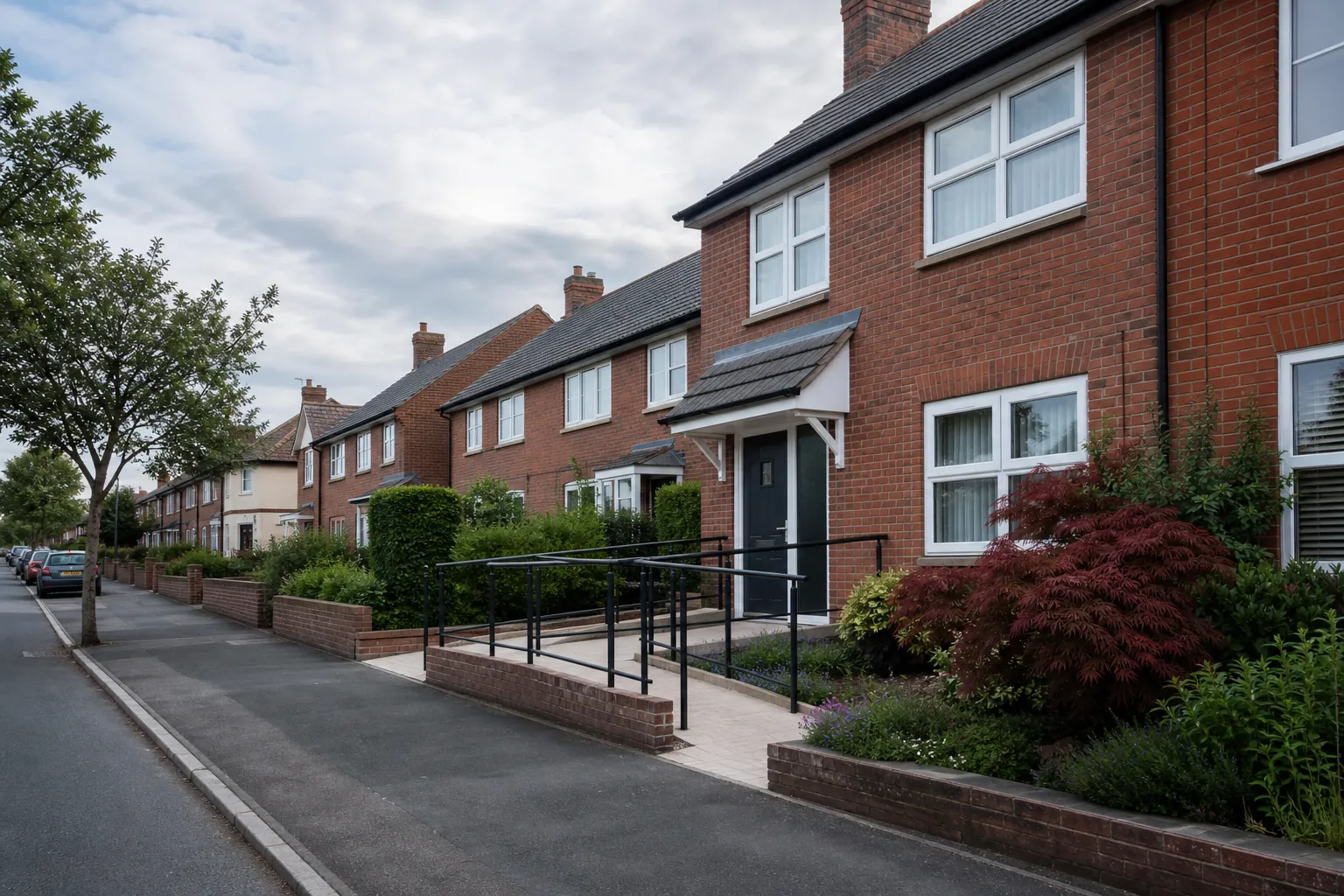
around 510,000 units
Supported units (England)
Funding for supported living and specialist supported housing in Leeds: acquisition finance, commercial mortgages, bridging, development, mezzanine and long-term debt.
Supported Living Finance arranges funding for supported living, specialist supported housing and social housing across West Yorkshire. Whether you are buying a supported living home let to a registered provider, refinancing onto a commercial mortgage, or funding a conversion to supported housing, we model the facility for your Leeds deal and place it with the right lender. Leeds sits in West Yorkshire, within the Yorkshire and the Humber supported housing investment market.
Lenders underwrite a Leeds supported housing asset on the lease and the registered-provider covenant first, then on what the building is worth without either. There were 1,581 registered providers on the Regulator of Social Housing register at 31 March 2025 (Regulator of Social Housing, Statistical Data Return 2025, 31 March 2025), but the number a specialist lender will accept on a long lease is a fraction of that.
A commercial mortgage is the core way to buy or refinance a supported living investment in Leeds. We arrange acquisition finance for existing let assets and term debt that holds them for the long run on 5 to 25 year terms. Stock let on a long, index-linked, fully repairing and insuring lease to a registered provider is underwritten on the lease and the provider covenant, indicatively to around 65 to 75 percent of value where the counterparty is a substantial housing association, and materially less where it is a small lease-based provider. The point most Leeds investors discover late is the valuation basis: a lender may capitalise the lease rent, or it may ignore the lease and value the property as an ordinary home, and the gap between those two figures decides the loan. We establish which basis applies before an application goes in, and place each facility with the lender that prices West Yorkshire lease-backed stock best.
Each property type is underwritten differently. We arrange finance for specialist supported housing, supported living property, exempt accommodation, social and affordable housing, HMO conversions to supported living, extra care housing and retirement living in Leeds and across West Yorkshire. A house let to a large housing association on a 30 year lease and a converted HMO let to a small non-profit provider claiming the housing benefit exemption are credit-assessed in entirely different ways, and knowing which lender backs each format is the work we do before a deal reaches credit. The structural demand sits behind all of them: social landlords in England own around around 510,000 units of supported housing today, and the National Housing Federation estimates at least 167,000 more supported homes are needed by 2040 (National Housing Federation, Supported housing in England: Estimating need and costs to 2040, by 2040).
On a supported living investment in Leeds let to a strong registered provider, a commercial mortgage usually reaches around 65 to 75 percent of value, so you would budget for equity of roughly a quarter to a third of the price. Where the provider is small, or where the lender values on vacant possession rather than on the lease, the effective equity requirement can be considerably higher, and that is the single most common reason a Leeds purchase stalls between offer and completion. New or converted stock is funded on cost instead: bridging finance secures a purchase, an auction lot or a conversion quickly, and development finance funds a build or change of use to around 60 to 70 percent of cost, with mezzanine topping the stack where the scheme supports it. Rates depend on the lender, the lease length and the covenant strength, so we quote them deal by deal rather than as a headline rate.
Leeds hosts the largest legal and financial services centre in the UK outside London, and its economy is among the most diverse of any major British employment hub. Leeds is served by M1 J45, M62 J27 and M621, the kind of road and transport access that matters to a provider staffing dispersed supported living units across a patch. Demand draws on neighbourhoods across the town, from Headingley, Roundhay, Chapel Allerton and Horsforth, each generating referrals into local supported housing. Leeds City Council is the local authority that commissions supported living placements here. It also administers housing benefit for exempt accommodation and will operate the licensing district created by the Supported Housing (Regulatory Oversight) Act 2023, which makes its posture unusually relevant to a lender.
As a measure of the local property economy, Leeds recorded 8,056 residential transactions in the last twelve months on HM Land Registry price paid data, at a median price of £235,000. That matters here for a specific reason: it is the best available proxy for the vacant possession value a lender will fall back on, which on most supported housing deals is the number that actually sets the loan. Supported housing development is live in the local pipeline: the council planning register shows 4 recent applications for supported housing or C2 use in the Leeds area, including 26/01705/FU (Erection of 8no. Class C2 assisted living units in two blocks, landscaping, parking and access). We track these across council portals through the Construction Capital planning data feed. The demand thesis behind supported housing is national and structural: government already spends around £3.5bn a year on the accommodation element of supported housing in England (National Audit Office, Investigation into supported housing, 2023, 2023), and the National Housing Federation estimates at least 167,000 more supported homes are needed by 2040, a 33 percent increase on 2023 (National Housing Federation, Supported housing in England: Estimating need and costs to 2040, by 2040). That undersupply underpins provider demand for stock in Leeds as much as anywhere, though it is a national argument rather than a measurement of this town.
Location facts and Land Registry data. Market figures shown are national or Yorkshire and the Humber-level, not Leeds-specific.
Source: council planning register (Idox). A development-activity signal, not our applications.
Leeds is a prime supported housing catchment within Yorkshire and the Humber. Active local-authority commissioning and a deep pool of registered providers support lease-backed investment, and lenders compete hardest for stock on long leases to strong covenants here. The trade-off is yield: higher entry prices compress the return on a registered-provider lease, so deals in Leeds rest more on covenant strength and capital security than on headline income.
Leeds and Sheffield anchor Yorkshire's supported housing market, with strong local-authority demand and affordable stock for supported living conversions.
Yorkshire's supported housing market leans on its big cities, where active local authorities and a large working-age support population sustain demand. Affordable acquisition prices make conversions stack at yields well above the southern regions, and registered providers are active across the region. Around 29 percent of the supported housing owned by social landlords in England is let to working-age adults on National Housing Federation research, and that cohort drives most of the lease-backed investment activity here rather than later-living demand. Development and conversion finance in Yorkshire is led by repurposing older residential and institutional stock, which is bridging and refurbishment work before it is term debt.
Market commentary and figures for Yorkshire and the Humber are drawn from National Housing Federation (Supported housing in England: Estimating need and costs to 2040, 2023).
Supported housing market figures are published nationally, not per town, so the sector figures on this page are presented as context for a Leeds appraisal and attributed to their sources (National Housing Federation, Supported housing in England: Estimating need and costs to 2040; Regulator of Social Housing, Statistical Data Return 2025). Town-level facts are different: transport access, the commissioning local authority, and the Land Registry housing-transaction data are genuinely local and sourced. We do not publish a Leeds-specific yield or rent as if it were measured, and we do not repeat the gross yields quoted in investment marketing. Nationally, social landlords in England own around around 510,000 units of supported housing (National Housing Federation, Supported housing in England: Estimating need and costs to 2040, 2023).
Yes, but not a mainstream buy-to-let mortgage. A supported living investment in Leeds is financed with a commercial mortgage sized on the lease to the registered provider, because the tenant is a company on a commercial lease and the property may be adapted. We arrange these for investors, landlords and developers, indicatively to around 65 to 75 percent of value on a strong lease, and place each one with a lender that genuinely backs the sector.
Indicatively a quarter to a third of value, but the figure that matters is which value the lender uses. Where a lender sizes on the vacant possession value of the Leeds property as an ordinary home, rather than on the price paid for the let investment, the effective deposit can be considerably higher. We establish the valuation basis before an application goes in rather than discovering it at survey.
Rates depend on the lender, the lease length and the covenant strength, so we quote them deal by deal rather than as a headline. Indicatively, term debt and commercial mortgages start from around 5.5 to 6 percent on a strong housing association lease, development finance from around 0.7 percent per month and bridging from around 0.75 percent per month, with terms from months on a bridge to 25 years on a commercial mortgage, sized inside the remaining lease term.
Yes. Conversions to supported living or exempt accommodation are usually funded with bridging or development finance against the purchase and the cost of works, then refinanced onto a commercial mortgage once a provider is on a signed lease. Build the facility term around the lease-up period rather than the build programme: the gap between practical completion and a provider signing is what catches Leeds investors out, and it can run several months.
Send us the outline and we will come back with a view on fundability and likely terms within one working day.