Specialist supported housing explained
Specialist supported housing is purpose-adapted accommodation let on a long lease to a registered provider of social housing, who arranges housing management fo

Specialist supported housing is purpose-adapted accommodation let on a long lease to a registered provider of social housing, who arranges housing management for adults who need support to live independently. It is usually shortened to SSH.
This guide explains what it is, how the lease-based model works, who pays for it, how it is regulated, and what changes when you look at it as a lender rather than as a buyer. We arrange finance in this sector and do not sell the properties.
What does specialist supported housing mean?
Specialist supported housing is accommodation designed or adapted for adults who need support to live independently, let on a long lease to a registered provider that handles housing management and works alongside a separate care provider. Residents are typically working-age adults with learning disabilities, mental health needs or physical disabilities.
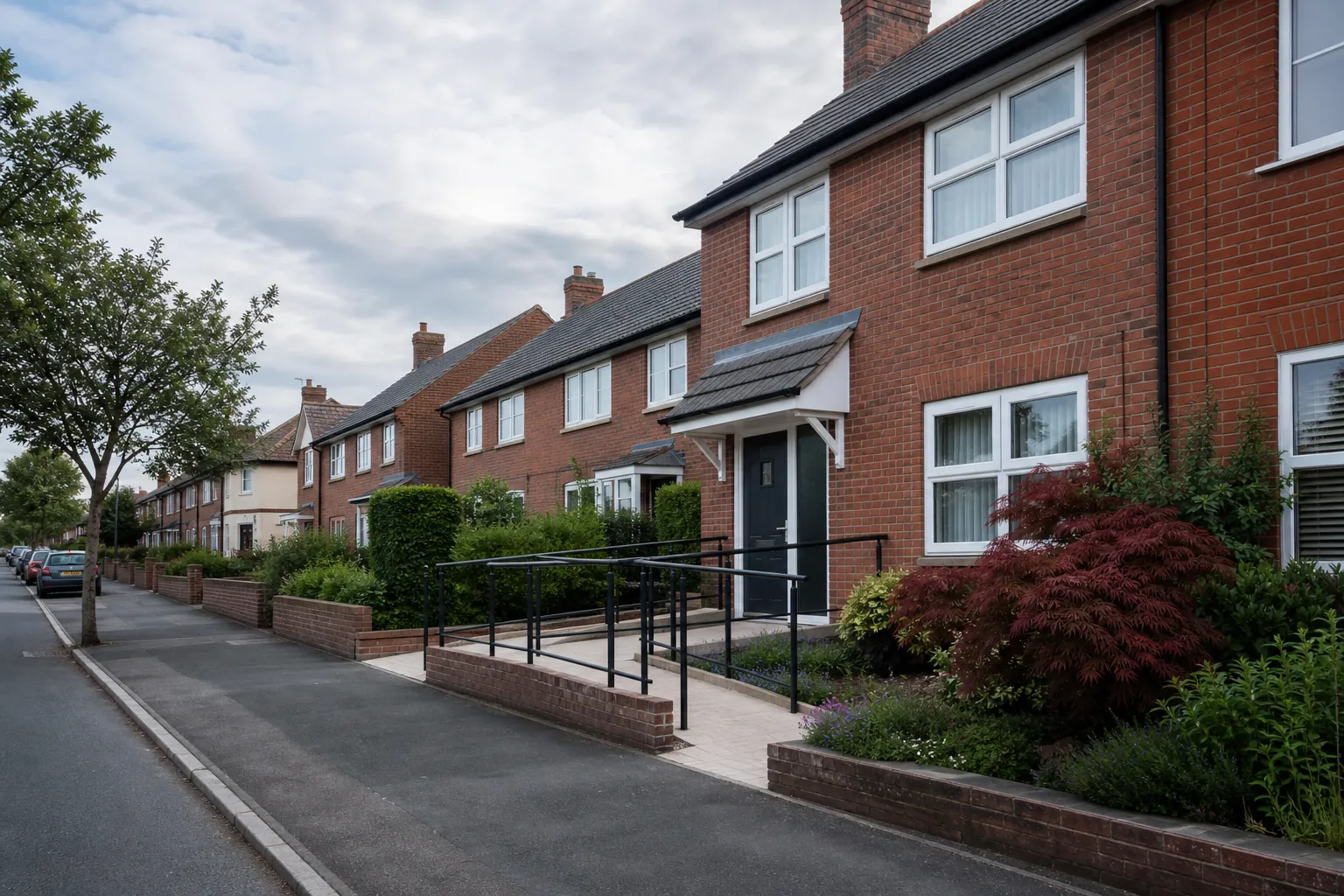
The physical stock is often unremarkable: ordinary houses and flats, adapted with level access, wet rooms, wider doorways, hoists or assistive technology depending on the cohort. What makes it specialist is the combination of that adaptation, the support arrangement, and the funding route.
What is SSH in property, and how does the lease work?
SSH in property terms is the lease-based model behind the accommodation. The owner buys or builds suitable stock and grants a lease to a registered provider, commonly for 15 to 25 years, with rent rising each year by an index such as CPI, on fully repairing and insuring terms so the provider rather than the owner carries maintenance.
That structure is what turns residential property into a long-income, hands-off investment. It also concentrates every risk into one place: the provider. The owner has no relationship with the residents, no exposure to individual tenancies, and no operational role, but equally no fallback if the single counterparty fails.
Who qualifies for supported accommodation?
Access is arranged through the local authority or NHS rather than by the landlord. A person is generally assessed as needing support to live independently, under the Care Act in England, and a package of housing and support is put together for them. The housing element and the care element are commissioned and funded separately, which is a defining feature of the model.
Investors sometimes assume they will have some say over who occupies their property. They will not, and would not want to: the provider holds the relationship with residents and the commissioning authority, and the separation is what keeps the owner's position purely a property one.
How SSH is funded
Rent is met through housing benefit under exempt-accommodation rules, which sit outside the normal rent restrictions and local housing allowance caps. That is what allows the rent under an SSH lease to exceed what the same property would command on the open market. Government spends around £3.5bn a year on the accommodation element of supported housing in England (National Audit Office, Investigation into supported housing, 2023).
The chain runs from the local authority's housing benefit decision, through the provider, to the owner. Each link can fail independently. A council can challenge a claim; a provider can fail even while claims are being paid. Understanding that the income is a corporate lease with a public-funding dependency, rather than a government-backed payment, is the single most useful thing an investor can understand about this asset.
Who regulates specialist supported housing?
The registered providers who take the leases are regulated by the Regulator of Social Housing, which publishes judgements on their governance and financial viability. There were 1,581 registered providers on the register at 31 March 2025, of which 1,353 private registered providers (Regulator of Social Housing, Statistical Data Return 2025).
The accommodation itself is not yet licensed. The Supported Housing (Regulatory Oversight) Act 2023 creates powers for a local-authority licensing regime, and the government confirmed the scope in its consultation response of 16 April 2026, with MHCLG expecting to consult on draft regulations in late 2026. Care and support delivered to residents is separately regulated by the Care Quality Commission where it is a regulated activity.
What is the difference between social housing and supported housing?
Social housing is let at below-market rents to households in housing need, usually by a council or housing association, and funded through ordinary social rent supported by housing benefit within the normal limits. Supported housing is a subset where accommodation comes with care, support or supervision, and where the rent is funded under exempt-accommodation rules that sit outside those limits.
The practical consequence for an investor is that supported housing rents are higher, which is the attraction, and that they rest on a benefit treatment which can be assessed and challenged, which is the risk. General-needs social housing let to a substantial housing association carries less of both.
How a lender reads an SSH deal
A lender looks at the lease first: length, indexation mechanism and any cap or collar, whether it is genuinely fully repairing and insuring, and what break rights exist. Then the provider: its regulatory judgement, its accounts, and how much lease-based stock it already carries. Then the property, and specifically what it is worth with vacant possession as an ordinary home.
That third question is usually decisive. Where a lender will not rely on the lease, it sizes the loan on vacant possession value, which can be far below the price paid for the let investment. Indicative leverage runs to around 65 to 70 percent on a strong long lease, with term rates from around 6 percent, and the term is sized inside the remaining lease.
Specialist supported housing explained: common questions
What does specialist supported housing mean?
Accommodation designed or adapted for adults who need support to live independently, let on a long lease to a registered provider that handles housing management alongside a separate care provider. Residents are typically working-age adults with learning disabilities, mental health needs or physical disabilities.
What is SSH in property?
SSH stands for specialist or specialised supported housing, the lease-based model where an owner grants a long, index-linked, fully repairing and insuring lease, often 15 to 25 years, to a registered provider. The owner has no relationship with residents and no operational role, but no fallback if the provider fails.
Who qualifies for supported accommodation?
Access is arranged through the local authority or NHS, not the landlord. A person is generally assessed as needing support to live independently, and housing and support are commissioned and funded separately. The landlord has no say over who occupies the property, and the separation is what keeps their position purely a property one.
What is the difference between social housing and supported housing?
Social housing is let at below-market rents to households in housing need under the normal rent limits. Supported housing is a subset where care, support or supervision is provided and rent is funded under exempt-accommodation rules outside those limits, which is why rents are higher and why the benefit treatment is the risk.
Who regulates specialist supported housing?
The Regulator of Social Housing regulates the registered providers who take the leases and publishes judgements on their governance and viability. The accommodation is not yet licensed, though the Supported Housing (Regulatory Oversight) Act 2023 creates powers for local-authority licensing, with draft regulations expected to be consulted on in late 2026.
Ready to talk about a real deal?
Send us the deal and we will come back with a view on fundability and likely terms within one working day.