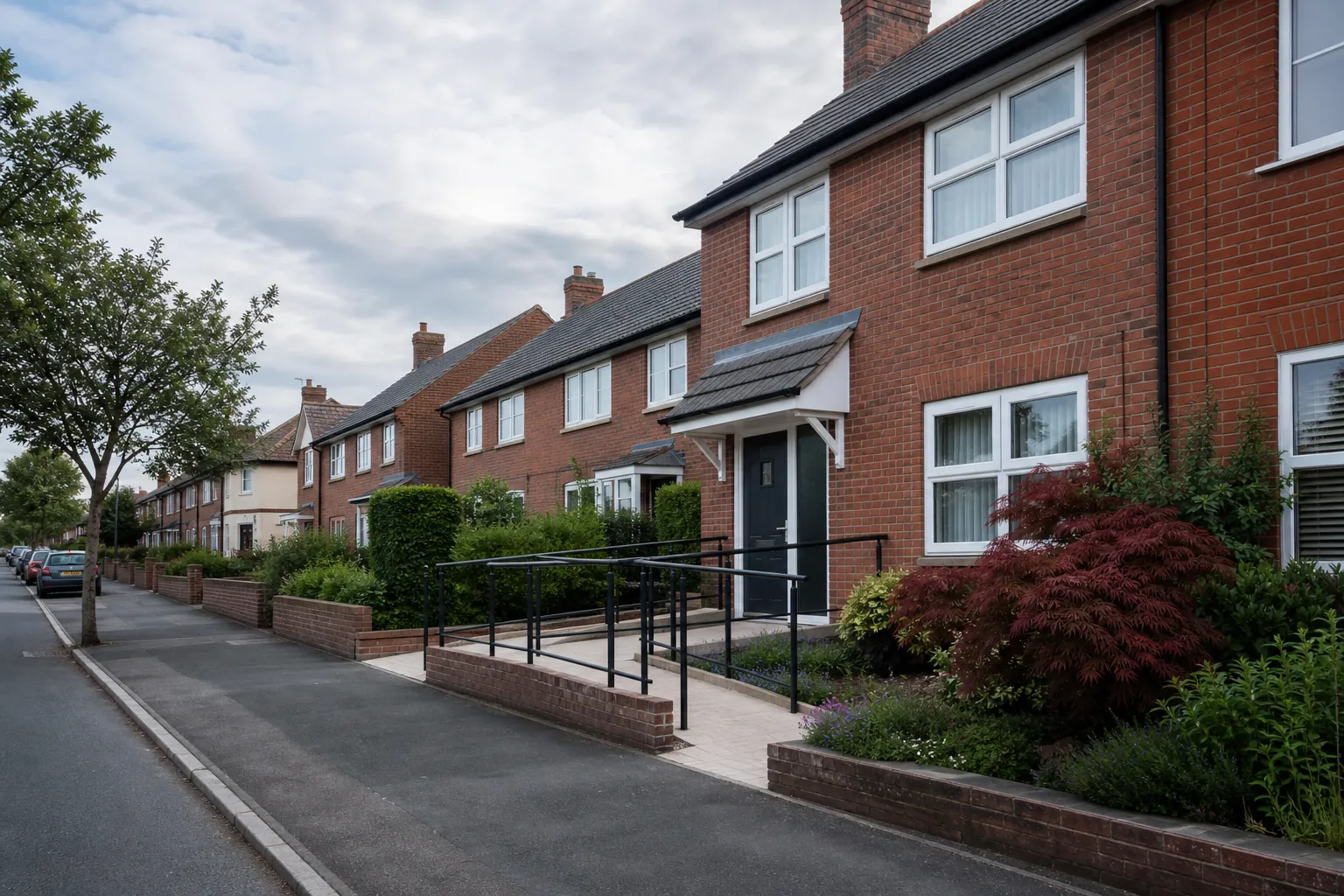
Supported living for adults with learning disabilities
Supported living for adults with learning disabilities is the largest single strand of the working-age supported housing sector. It is also where the case for t

Supported living for adults with learning disabilities is the largest single strand of the working-age supported housing sector. It is also where the case for the model is clearest: people who would once have lived in institutions live in ordinary houses on ordinary streets, with the support they need.
This guide explains how it works in practice, and then what it means for the buildings and the people who finance them.
What supported living looks like for someone with a learning disability
Usually an ordinary house or flat, lived in alone or shared with one to three others, in a residential street rather than on a campus. The person holds a tenancy. Support staff help with whatever the person's assessed needs require: cooking, budgeting, medication, appointments, travel, work or college, and social contact.
Support levels vary enormously, from a few hours a week to waking night staff and one-to-one cover. What stays constant is that the home is the person's own and the support is a separate service delivered into it.
Who commissions and pays for it
The local authority typically assesses the person under the Care Act and commissions the care and support, sometimes jointly with the NHS where health needs are significant. The accommodation is funded separately through housing benefit, often under exempt-accommodation rules where the housing provider also delivers support or supervision.
Some people direct their own support through a personal budget or direct payment, choosing their own care provider while the housing arrangement stays in place. That flexibility is one of the model's strengths and one reason housing and care are kept separate.
Why tenure is unusually long
Learning disabilities are lifelong. Someone moving into supported living in their twenties may live in the same home for decades, and for many people it will be their permanent home. Moves happen when needs change substantially or when a person chooses to move, not on the rhythms of an ordinary rental market.
That long tenure is the foundation of everything on the property side. It is why registered providers will commit to 20 and 25 year leases on this stock, and why the income from it is genuinely long-dated in a way that mainstream residential letting is not.
What the homes need physically
It depends entirely on the people being supported. Some need no adaptation at all beyond an ordinary well-maintained house. Others need level access, wet rooms, wider doorways, ceiling hoists, reinforced fittings, sensory-appropriate finishes, or a separate staff sleep-in room.
For an owner this matters at both ends of the deal. Adaptations cost money up front, and more importantly they affect what the property is worth if the provider ever leaves. Adaptations that can be reversed protect that value; heavy, irreversible institutional conversion reduces it, and lenders price the difference.
Where the property and finance side fits
In many cases the home is owned by a private investor who has granted a long lease to a registered provider of social housing. The provider holds the tenancy with the resident and manages the housing; a care company, often a different organisation entirely, delivers the support.
For the investor the return is the lease rent, and the risk is the provider. We arrange the finance on these purchases and conversions, sized on the lease and the covenant, and we look hard at the vacant possession value because that is what underpins the position if the provider leaves. We are an arranger, not a lender, and we do not sell the properties.
Supported living for adults with learning disabilities: common questions
What is supported living for learning disabilities?
An arrangement where an adult with a learning disability has their own home, holding their own tenancy, usually an ordinary house or flat lived in alone or shared with a few others, and receives care and support as a separate service ranging from a few hours a week to twenty-four hour cover.
What qualifies you for supported living?
A local authority assessment, usually under the Care Act, finding that you need support to live independently but can do so in your own home with that support in place. The care is commissioned separately from the accommodation, which is funded through housing benefit.
How long do people with learning disabilities stay in supported living?
Often for decades, and for many people it is a permanent home. Learning disabilities are lifelong, so moves happen when needs change substantially or by choice rather than on the rhythms of an ordinary rental market. That long tenure is why providers commit to 20 and 25 year leases on the properties.
Do supported living homes need adapting?
It depends on the people supported. Some need none beyond an ordinary well-maintained house; others need level access, wet rooms, wider doorways, hoists or a staff sleep-in room. Reversible adaptations protect the property's open-market value, and heavy institutional conversion reduces it, which lenders price accordingly.
Who owns learning disability supported living homes?
Frequently a private investor, who grants a long lease to a registered provider of social housing. The provider holds the tenancy and manages the housing, while a separate care company delivers the support. The investor's return is the lease rent and their main risk is the provider's ability to pay it.
Ready to talk about a real deal?
Send us the deal and we will come back with a view on fundability and likely terms within one working day.