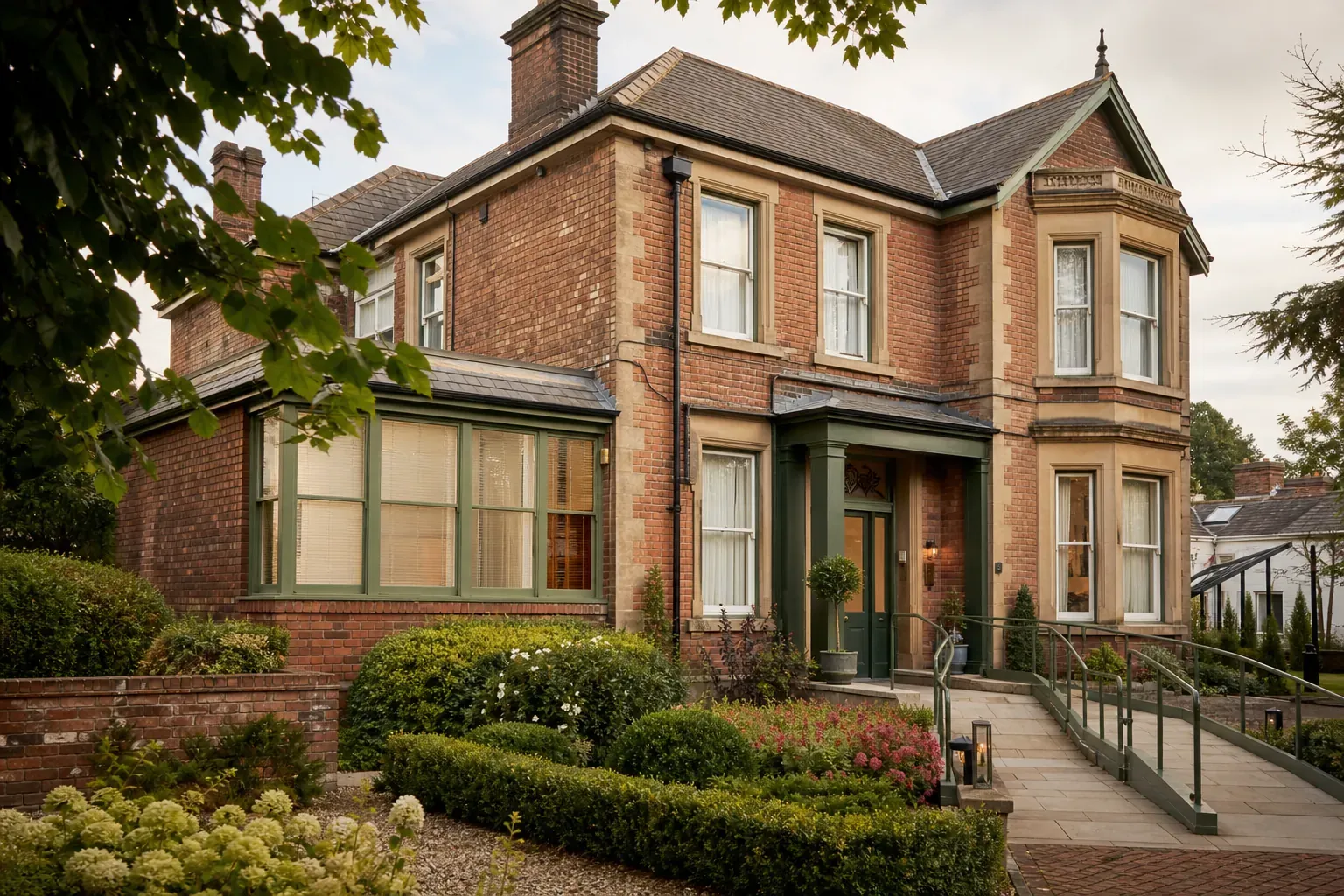
Supported living property investment finance
Funding for supported living homes let to a provider, from a single dispersed unit to a small portfolio, arranged against the income the lease actually produces.

Funding supported living
Supported living property is ordinary residential stock, houses and flats, let to a provider who supports adults living there to stay independent in their own homes. It differs from a care home in a way that matters to a lender: residents hold their own tenancy or occupancy agreement and the care is bought separately, so the building is a property investment rather than a trading business.
Most investors reach this sector through a packaged proposition: a unit is sold already let, with a lease and a headline yield attached. Our role begins where that brochure stops. We look at what the lease actually says, who is on the other side of it, and what the property is worth without it, then arrange the funding on that basis. We are a finance arranger and introducer. We do not sell investment property and we have nothing to gain from a particular unit completing.
What we fund
- Single dispersed supported living units let to a provider
- Small clusters of units under one lease
- Existing houses and flats adapted to supported living standard
- Stock bought already let, with the lease in place at completion
- Purchases where the lease is signed on or shortly after completion
- Small portfolios assembled across one or more providers
Indicative terms
- Typical lot size (indicative)£150k to £3m
- Term LTV (indicative)Up to around 65 to 70% on a strong lease
- Term rates (indicative)From around 6%
- Residential comparatorPrime regional single family housing 4.50% and above NIY (Knight Frank, Feb 2026)
Indicative only. Terms vary by lender, asset and borrower and are not an offer of finance.
Arranging debt on a supported living unit
We arrange acquisition finance and term debt on supported living property, sized on the lease income and the provider covenant. Where the unit is bought already let, a commercial mortgage or term loan is the usual route, indicatively up to around 65 to 70 percent of value. Where the property has to be bought and adapted before a provider will take it, we arrange bridging for the purchase and works and then a refinance onto term debt once the lease is signed. One point worth making plainly: mainstream buy-to-let lenders will not fund this, because the tenant is a company on a commercial lease and the property may be adapted. Assuming otherwise is the most common reason a purchase falls over between offer and completion.
What a lender tests before it prices the loan
Lenders start with the lease: its length, whether the rent is indexed and how, whether repairs sit with the provider, and what break rights exist. They then test the provider, because the rent is only as reliable as the organisation paying it. They will ask whether the provider is registered with the Regulator of Social Housing, how much lease-based stock it already carries, and what its accounts look like. Finally they value the property twice in effect, once with the lease and once without it. On smaller dispersed units the vacant possession value usually drives the loan, because a single house in an ordinary street has an obvious alternative use and the lender would rather rely on that than on a 25-year promise from a small provider.
Reselling a supported living investment
This is the part of the proposition that gets least attention at the point of purchase and matters most later. Supported living units are not liquid in the way an ordinary house is. The buyer pool is other supported living investors, and what they will pay depends on how much of the lease remains and how the provider is regarded at that moment. A unit with 20 years left on a lease to a well-regarded provider will trade. The same unit with 6 years left, or with a provider under regulatory scrutiny, may only find a buyer at close to its vacant possession value. Investors should assume the realistic floor on any exit is what the property is worth as an ordinary home, and treat anything above that as dependent on the lease holding up.
Finance that suits this asset class
- Acquisition financeBuying a unit already let, or letting on completion.
- Commercial mortgagesTerm debt sized on the lease rent and cover.
- Bridging financeBuying and adapting before a provider takes the lease.
Useful calculators
Related guides
Fund a supported living deal
A view on fundability within one working day.
Is supported living profitable in the UK?
It can be, and the gap against mainstream residential is the reason people look at it. Prime regional single family housing sat at 4.50% and above on a net initial yield basis in February 2026 on the Knight Frank Intelligence Prime Yield Guide, and supported living stock is routinely marketed at well above that. The honest framing is that the extra yield is payment for risk mainstream residential does not carry: provider failure, void periods, regulatory change and a much thinner resale market.
Two cautions on the numbers you will see advertised. Marketed yields are usually gross and are quoted by the party selling the unit, and Knight Frank does not publish a prime yield for specialist supported housing at all, so there is no institutional benchmark to check them against. A lender will do its own valuation and its own arithmetic, and where those disagree with the brochure it is the lender's figures that decide how much you can borrow.
Who actually pays the rent on a supported living home?
The chain runs from the resident's housing benefit, through the provider, to you. Rent for supported and exempt accommodation is met through housing benefit rather than from residents' own resources, and government spends around £3.5bn a year on the accommodation element of supported housing in England (National Audit Office, Investigation into supported housing, 2023).
That chain has two joints, and both can fail. The local authority can challenge whether the accommodation qualifies for the enhanced housing benefit rate, and the provider can fail even where benefit is being paid. Your lease is with the provider, so your legal recourse is against the provider, not against the local authority or the resident. Understanding that is the difference between reading a supported living investment as government-backed, which it is not, and reading it as a corporate lease with a public-funding dependency, which it is.
How lenders size a loan against lease rent
A term lender sizes the facility on the lower of a loan-to-value test and an income cover test, and on supported living the income test is usually the binding one. The lender takes the passing rent under the lease, applies an interest cover ratio, commonly requiring rent to cover interest by a comfortable margin, and lends the amount that arithmetic supports.
Where investors are caught out is the valuation basis. If the lender values on vacant possession rather than on the investment value implied by the lease, the loan drops accordingly and the equity required rises. We establish which basis a lender will use before an application goes in, because discovering it at valuation stage costs weeks and sometimes the deal.
The questions to ask before you commit
Five questions decide whether a supported living purchase is fundable. Who is the registered provider, and what does its most recent regulatory judgement and set of accounts say? How long does the lease run, and is the indexation capped or collared? Is the lease genuinely fully repairing and insuring, or do repairing obligations creep back to the landlord? What is the property worth with vacant possession, on an ordinary residential valuation? And what happens on a break or a surrender?
If the party selling the unit cannot answer all five in writing, that is itself an answer. We ask these questions as a matter of course because a lender will ask them, and it is cheaper to find the problem before an offer is accepted than after solicitors are instructed.
Worked example: a single let supported living house
An investor buys a three-bedroom house, already adapted and let on a 25-year CPI-linked FRI lease to a registered provider, at £220,000 with a passing rent of £15,400 a year. These figures are illustrative only and not an offer of finance.
The lender values the property twice. On the investment basis, capitalising the lease, it supports the £220,000 price. On a vacant possession basis, as an ordinary three-bed house in that street, it is worth £165,000. The lender advances 65 percent of the lower figure, roughly £107,000, so the investor needs about £113,000 of equity rather than the £77,000 a 65 percent loan on the purchase price would have implied.
That difference is the single most important number in the deal and it is rarely on the brochure. At an indicative rate from around 6 percent, interest of roughly £6,400 is covered comfortably by the £15,400 rent, so income cover is not the constraint here. The valuation basis is.
The investor's position is sound provided the provider performs, and protected if it does not, because the underlying house has an obvious alternative use. That is exactly the shape of deal lenders like, and it is why we look at the vacant possession value first.
Illustrative worked example only. Figures vary by lender, asset and borrower and are not an offer of finance.
Frequently asked questions
Is supported living profitable in the UK?
It can be, and yields are typically well above the mainstream residential comparator, which sat at around 4.50 percent net initial yield for prime regional single family housing in February 2026 on the Knight Frank Prime Yield Guide. That extra yield is payment for provider failure risk, void risk, regulatory change and a much thinner resale market. Marketed yields are usually gross and quoted by the seller, so check them against a lender's own valuation.
Can I get a buy-to-let mortgage on a supported living property?
Generally no. The tenant is a company on a commercial lease and the property is often adapted, which puts it outside mainstream buy-to-let criteria. Funding comes from specialist lenders and challenger banks on a commercial mortgage or term loan basis. Assuming a buy-to-let product will work is the most common reason these purchases fall over between offer and completion.
What is assisted living investment?
Assisted living generally means age-restricted housing where residents live independently with care available on site, which is a different asset to working-age supported living. The two are often marketed under similar language. They are underwritten differently, because assisted living income can come from sales, service charges or an operator lease rather than a registered-provider lease.
How much deposit do I need for a supported living investment?
Indicatively 30 to 35 percent of value, but the figure that matters is which value the lender uses. Where a lender sizes on vacant possession value rather than the price paid for the let investment, the effective deposit can be materially higher. We establish the valuation basis before an application goes in.
Is supported living investment government backed?
No. The rent is funded through housing benefit, so there is public money in the chain, but your lease is with a provider and your recourse is against that provider. If it fails, the rent stops. Government does not guarantee the lease, the rent or the capital value, and any marketing that suggests otherwise is overstating the position.
Funding a supported living asset?
Tell us about the deal and we will come back with a view on fundability and likely terms.