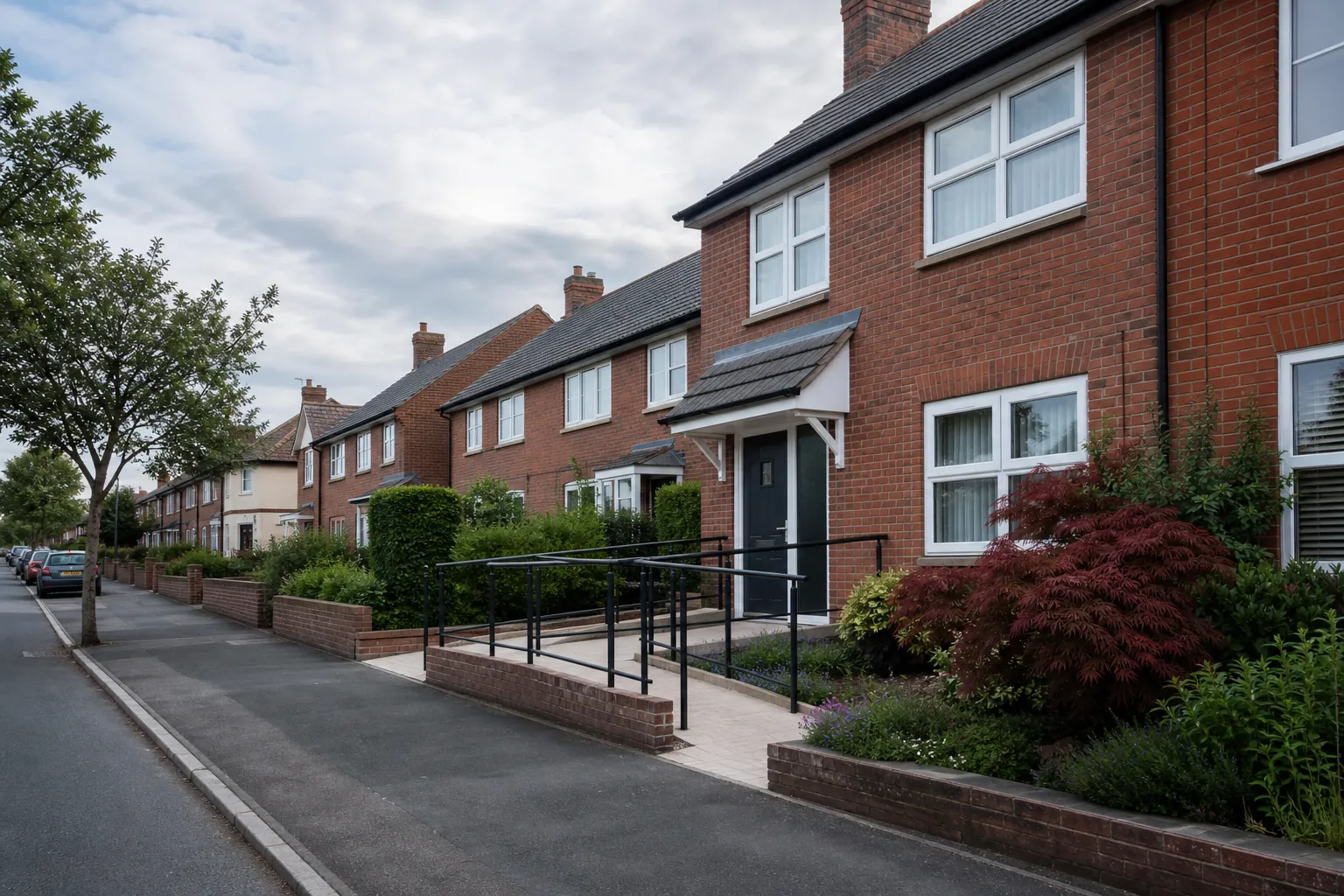
Supported exempt accommodation explained
Supported exempt accommodation is a housing benefit category, not a type of building. Accommodation qualifies where it is provided by a housing association, cha

Supported exempt accommodation is a housing benefit category, not a type of building. Accommodation qualifies where it is provided by a housing association, charity, voluntary organisation or non-metropolitan county council, and where that body or someone acting on its behalf provides the resident with care, support or supervision.
The effect of qualifying is that the usual rent restrictions and local housing allowance caps do not apply, so a higher rent can be met in full. That single mechanism explains most of what the sector looks like, why it grew as fast as it did, and why it is now being regulated.
What qualifies as supported exempt accommodation?
Two tests have to be met. The landlord must be the right kind of body: a housing association, registered charity, voluntary organisation or non-metropolitan county council, rather than an ordinary commercial landlord. And care, support or supervision must be provided to the resident by that body or by someone acting on its behalf, at more than a minimal level.
Both tests are assessed by the local authority administering the housing benefit claim, case by case, and both can be revisited. That is the crucial point for anyone with money in the sector: qualification is a decision made by a council about a claim, not a permanent attribute of a property.
What the exemption is worth
It is the difference between a market rent and a substantially higher one on the same building. An ordinary terraced house producing a modest local market rent can produce a materially higher rent as exempt accommodation, because the local housing allowance cap does not bite.
That gap is what funds everything above it: the provider's support costs and margin, and the enhanced yield the property owner receives. It is also the reason the sector attracted operators of very variable quality, because the arithmetic works even for organisations delivering the bare minimum of actual support.
The four categories of specified accommodation
Exempt accommodation is one of four categories of what the regulations call specified accommodation. The others are managed properties where care, support or supervision is provided, refuges for people who have fled domestic violence, and local-authority hostels providing care, support or supervision.
All four share the feature that housing costs are met through Housing Benefit rather than through the housing element of Universal Credit, which keeps them outside the Universal Credit rent caps. For an owner, knowing which category a scheme sits in matters, because the tests and the local authority's approach differ between them.
Why the sector drew scrutiny
Non-commissioned exempt accommodation, where no local authority had contracted for the service and the provider relied on housing benefit alone, grew rapidly, particularly in Birmingham. The House of Commons Library and the local authority both documented that growth.
The concerns were serious: poor property conditions, minimal support provided in exchange for enhanced rents, and vulnerable residents placed in unsuitable accommodation with no effective oversight. The National Audit Office found in 2023 that there are no good data on the number of units or residents in supported housing at all, which is a fair measure of how limited that oversight had become.
What licensing will change
The Supported Housing (Regulatory Oversight) Act 2023 creates powers for a local-authority licensing regime aimed squarely at this part of the market. The government's consultation response of 16 April 2026 confirmed that licensing will apply to all supported housing in England where residents can claim Housing Benefit, administered by local housing authorities operating as licensing districts, with a fit and proper person test for licence holders, their board directors and service managers.
Critically for owners, Housing Benefit entitlement will be linked to holding a licence. A provider that cannot obtain one will not be able to sustain the rent. MHCLG expects to consult on draft regulations in late 2026 and no enforcement date has been set, so this is a known direction of travel rather than an immediate change.
How lenders treat exempt accommodation
With caution, and usually by lending against the bricks rather than the income. Lenders comfortable with a long lease to a large registered provider frequently decline non-commissioned exempt accommodation let to a small provider, because the rent depends on a benefit treatment a local authority can challenge.
Where funding is available it is generally sized on the vacant possession value of the property as ordinary residential stock, and priced above standard supported living terms. An investor modelling a refinance against the capitalised enhanced rent will typically expect around double the facility a lender will actually offer, and that mismatch is the most common planning error in this corner of the market.
Supported exempt accommodation explained: common questions
What qualifies as supported exempt accommodation?
Two tests. The landlord must be a housing association, registered charity, voluntary organisation or non-metropolitan county council, and care, support or supervision must be provided to the resident at more than a minimal level. Both are assessed by the local authority, case by case, and both can be revisited.
What are the four categories of supported accommodation?
Exempt accommodation, managed properties where care, support or supervision is provided, refuges for people who have fled domestic violence, and local-authority hostels providing care, support or supervision. Together they are known as specified accommodation, and housing costs for all four are met through Housing Benefit.
Do you pay rent in supported accommodation?
Yes, there is a rent, but it is usually met through Housing Benefit rather than from the resident's own resources. Residents typically pay for utilities, food and personal spending, and may contribute towards care costs following a financial assessment.
How do you qualify for supported accommodation?
Through an assessment, usually by the local authority, finding you need care, support or supervision alongside housing. Placements are arranged through the council or NHS rather than by applying to a landlord directly.
Will licensing affect exempt accommodation?
Directly. The government confirmed in April 2026 that licensing will apply to all supported housing in England where residents can claim Housing Benefit, run by local housing authorities with a fit and proper person test, and that Housing Benefit entitlement will be linked to holding a licence. MHCLG expects to consult on draft regulations in late 2026.
Ready to talk about a real deal?
Send us the deal and we will come back with a view on fundability and likely terms within one working day.